










Winter weather events are becoming less predictable, even in regions that don’t traditionally experience prolonged cold, ice, or snow. Sudden freezes, icy roadways, power disruptions, and rapidly changing forecasts can create significant challenges for school districts — often with little time to respond.
While winter preparedness is commonly associated with protecting school buildings, the real risk often lies in day-to-day operations. Decisions around transportation, staffing, communication, and continuity of learning all play a critical role in keeping students and employees safe while minimizing liability exposure.
Early Decisions Reduce Risk
One of the most important factors during a winter weather event is timing. Decisions related to delayed starts, early dismissals, closures, or remote learning need to be made early and communicated clearly.
Last-minute changes can increase exposure to:
Transportation incidents involving buses or personal vehicles
Employee injuries while commuting in hazardous conditions
Confusion among parents and staff regarding campus status
Establishing clear decision-making authority and predefined thresholds for action helps districts respond consistently and confidently when weather conditions deteriorate.
Transportation Safety Is a Major Exposure
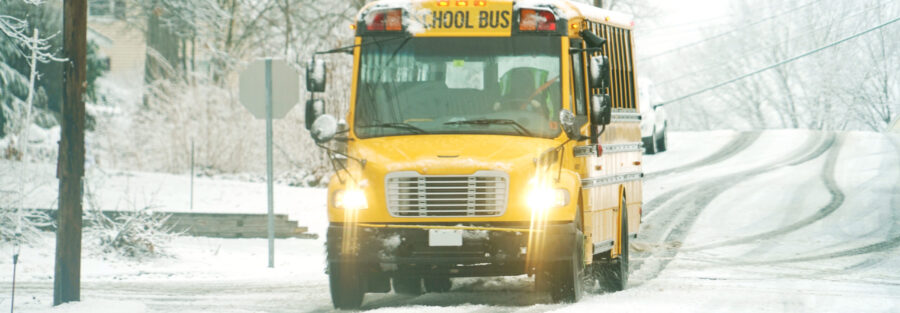
Student transportation is often the highest-risk operation during winter weather. Icy bridges, rural roads, reduced visibility, and fluctuating temperatures can significantly increase the likelihood of accidents.
Districts should consider:
Identifying bus routes that are more vulnerable to icy conditions
Planning alternative routes or partial service options
Ensuring drivers receive timely updates and clear instructions
Proactive transportation planning not only protects students and drivers, but also helps reduce auto liability and workers’ compensation claims.
Staff Readiness and Employee Safety
Winter weather also impacts employee attendance and safety. Clear guidance on reporting expectations, remote work options, and delayed arrival policies helps protect staff while maintaining operational continuity.
Without clear direction, districts may face:
Increased workers’ compensation exposure from commute-related injuries and staff slip-and-fall incidents on icy walkways and entrances
Inconsistent staffing across campuses
Confusion about essential versus non-essential roles
Having documented winter weather procedures ensures employees know how to respond and reduces uncertainty during high-risk conditions.
Communication Prevents Confusion and Claims
Effective communication is one of the most powerful risk management tools during weather disruptions. Messages should be consistent, centralized, and shared across all platforms used by the district.
Clear communication helps:
Prevent students from arriving at closed campuses
Reduce unauthorized access to school property
Manage parent expectations during rapidly changing conditions
A single, reliable source of truth can significantly reduce operational disruptions and liability concerns.
Continuity Planning Matters
Winter weather can also disrupt instructional schedules, food service programs, and special services. Even if remote learning is not implemented, having a continuity plan in place allows districts to adapt quickly when conditions change.
Preparedness includes:
Ensuring access to digital tools and communication platforms
Coordinating with nutrition services and support programs
Planning for makeup days or alternative instructional schedules
The goal is not just to react, but to maintain stability for students, families, and staff.
Preparedness Is a Team Effort
Winter weather preparedness extends beyond facilities management. It requires coordination among administration, transportation, human resources, communications, and risk management teams.
By focusing on operational readiness — not just physical assets — school districts can reduce injuries, limit claims, and maintain trust with their communities when winter weather strikes.
Working with a knowledgeable risk management advisor can help districts review response plans, clarify responsibilities, and ensure coverage aligns with winter weather exposures.
To learn how you can better protect your schools, contact an INSURICA advisor today.